Puzzles from the Games of Mikhail Tal
(40)
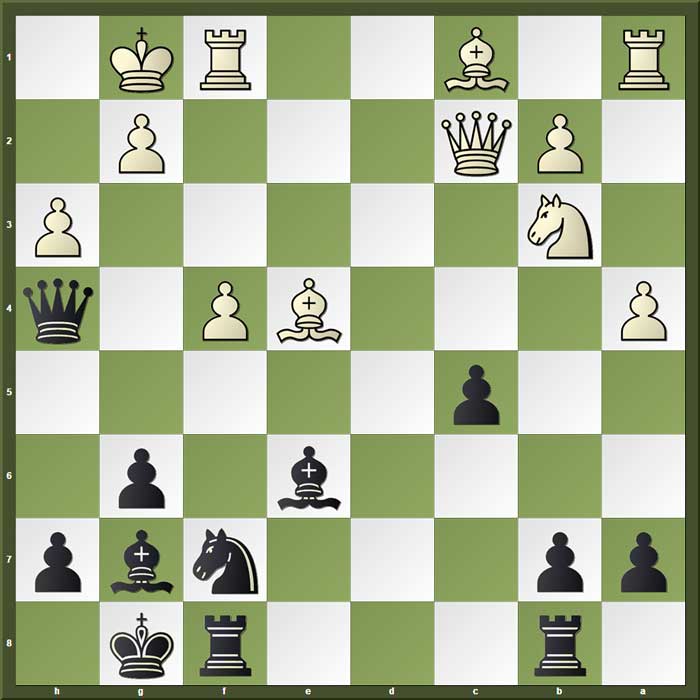
Black to play
In Pytel - Tal (Jurmala 1983) Tal played 20. ... Ng5! (20... c4 is a mistake because it just encourages the knight to come to the defence with 21. Nd2) 21. fxg5 (21. Ra3 c4 22. Na1 Bd4+ 23. Kh1 c3 24. bxc3 Bc5) ( or 21. Bd3 Nxh3+ 22. gxh3 Qg3+ 23. Kh1 Qxh3+ 24. Kg1 Qg3+ 25. Kh1 Bd5+ 26. Be4 Bxe4+ 27. Qxe4 Rf5) 21... Rxf1+ 22. Kxf1 Rf8+ 23. Bf3 (23. Ke2 Rf2+) (or 23. Kg1 Qe1+ 24. Kh2 Be5+) 23... Bc4+ and White resigned as mate is inevitable after 24. Kg1 Qe1+ 25. Kh2 Be5+
(39)
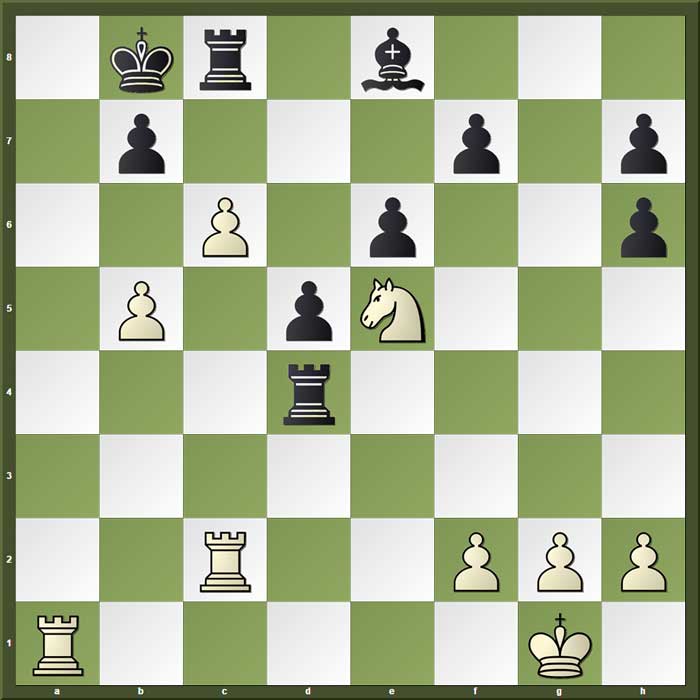
White to play
This is from the return match against Botvinnik in 1961. Tal won with 29. Nd7+ and Black resigned. White would win if the game continued: 29. ... Bxd7 (29... Kc7 30. b6+ Kd8 31. cxb7 Rxc2 32. b8=Q+ Kxd7 33. Qa7+ Kd8 34. b7 Rb2 35. b8=Q+ Rxb8 36. Qxb8+) 30. cxd7 Rd8 31. Rc8+ Rxc8 32. Ra8+ Kxa8 33. dxc8=Q+ Ka7 34. Qc5+ Kb8 35. Qxd4
(38)
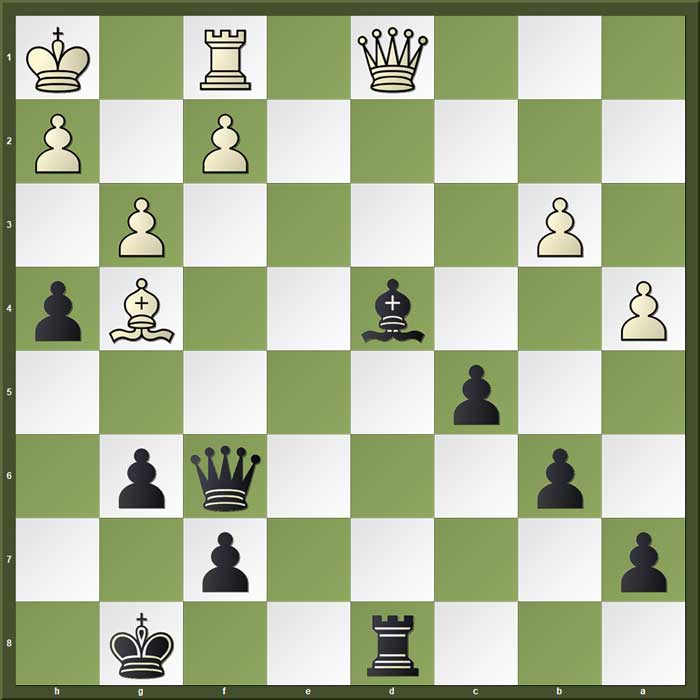
Black to play
With bishops of opposite colour, the attack against a weak colour complex is often strengthened by a sacrifice and this was the case in the game between Averbakh and Tal in the Soviet Championship of 1958 in Riga. Tal played 30. ... Bxf2! and won after 31. Qe2 Rd2 32. Qe8+ Kg7 33. gxh4 Qd4 34. Bh3 Qd3 35. Bg2 Rd1 0-1
(37)
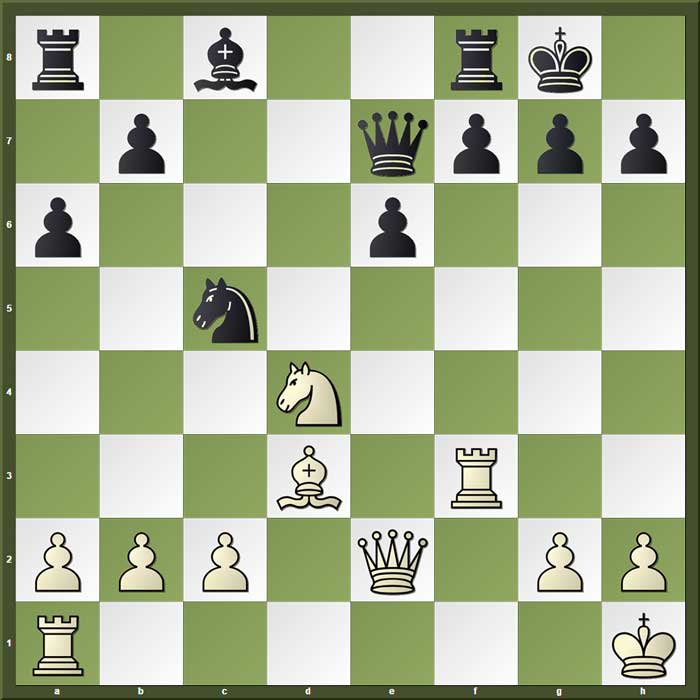
White to play
This was another game that Tal played as part of a simultaneous display. This time the display took place in East Berlin and the year was 1975. Tal played 17. Bxh7+! (17. Nf5 is a mistake - 17. ... Qc7 18. Nxg7 Kxg7 19. Rg3+ Kf6 20. Qh5 Ke7 and the attack fails) 17. ... Kxh7 18. Rh3+ (18. Nf5 Qg5 19. Rh3+ Kg6 20. Rg3 also wins) 18. ... Kg8 19. Nf5 (but not 19.Qh5? because 19. ... f5 and Black is winning) 19. ... Qg5 20. Qh5 and Black resigned because of 20. ... Qxh5 21. Ne7+ Kh7 22. Rxh5#
(36)
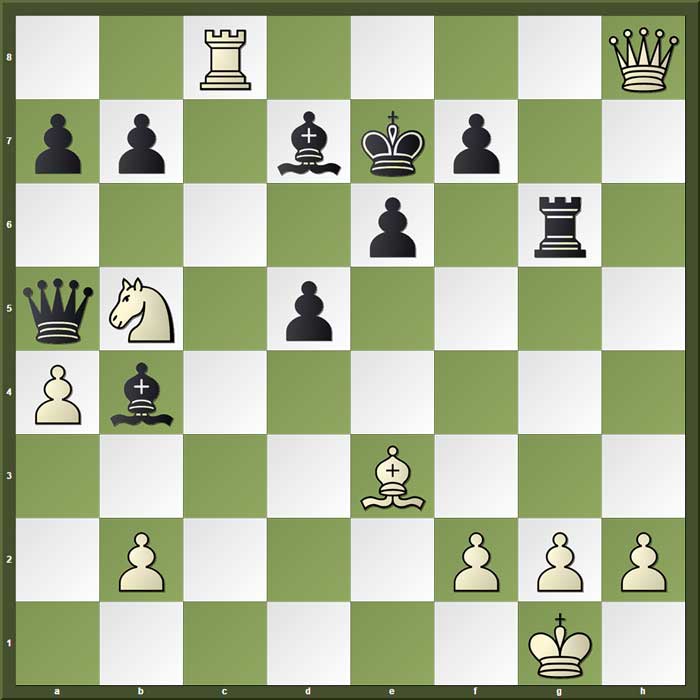
White to play - there are many ways to win but can you find, like Tal, the best and most beautiful way?
This was a game that Tal played as part of a simultaneous display in Riga in 1966. There are many ways to win from this position but Tal chose the clearest: 1. Bb6! (1. Qf8+ Kf6 2. Bd4+ Kg5 3. f4+ Kh5 4. Qh8+ Rh6 5. Qe5+ f5 6. g4+ Kxg4 7. Qe2+ Kxf4 8. Be3+ Ke5 9. Bg5#) 1... Qxb6 (1... axb6 2. Qd8#) 2. Qh4+ Rf6 (2... f6 3. Qh7+ Rg7 4. Qxg7#) 3. Qxb4+ Black Resigned
(35)
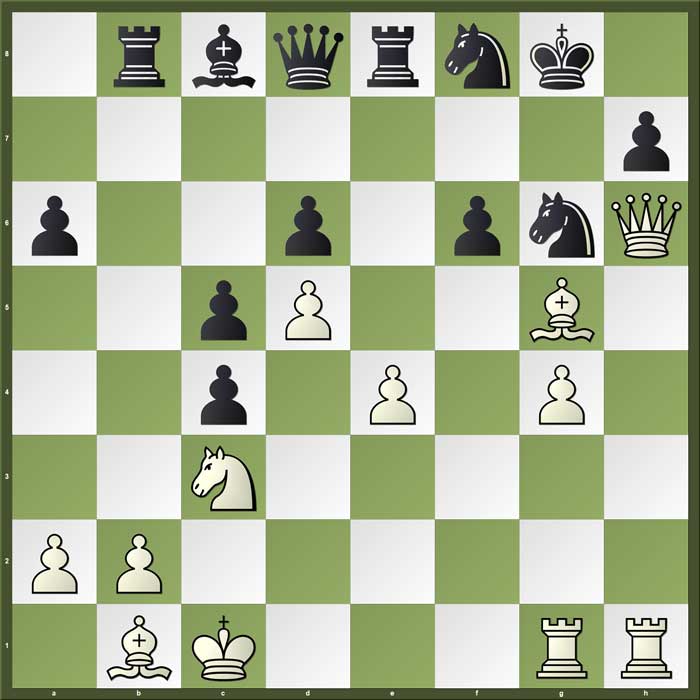
White to play
30. e5! Rxe5 (30... dxe5 31. Bxg6) (30... fxg5 31. Bxg6 hxg6 32. Qh8+ Kf7 33. Rh7+) 31. Bxg6 Rb7 32. Ne4 fxg5 33. Rf1 Rxe4 34. Bxe4 Rg7 35. Rf6 Bxg4 36. Rhf1 Nd7 37. Rxd6 Qe7 38. Rxa6 Kh8 39. Bxh7 Nb8 40. Bf5+ Kg8 41. Be6+ Bxe6 42. Rxe6 1-0 (Tal - Tolush Soviet Championship 1957)
(34)
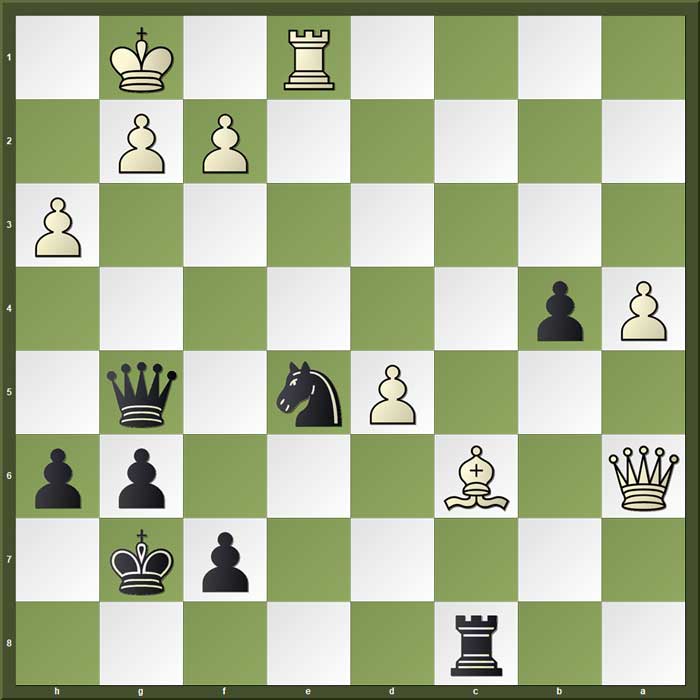
Black to play
39. ... Nf3+ 40. Kf1 Nxe1 41. Qxc8 Qc1 42. Qb7 Nf3+ 43. Ke2 Nd4+ 44. Kd3 Qc3+ 45. Ke4 Nf5 0-1 From Petrosian A. - Tal (Lvov 1981)
(33)
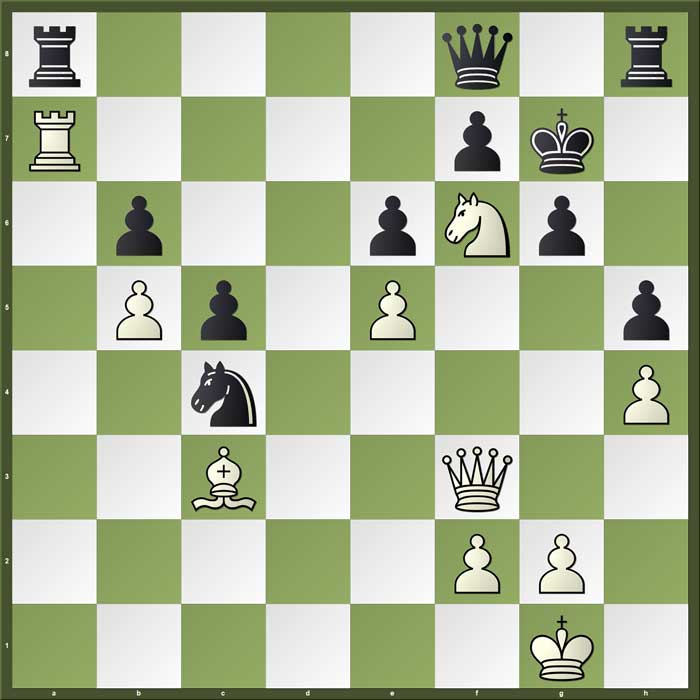
White to play
In the game Tal - Petrosian (Soviet Championship Leningrad 1977) Tal played the inferior 32. Nxh5+? gxh5 33. Qf6+ Kg8 34. Qg5+ Kh7 35. Qxh5+ Kg8 36. Qg5+ Kh7 37. Qh5+ Kg8 38. Qg4+ Kh7 39. Qe4+ Kg7 40. Qg4+ Kh7 41. Qe4+ 1/2-1/2. He could have played the much better 32. Rb7 - Zugzwang! - b8 (32... Ra3 33. Ne4 Rxc3 34. Qf6+ Kg8 35. Nxc3) 33. Nd7
(32)
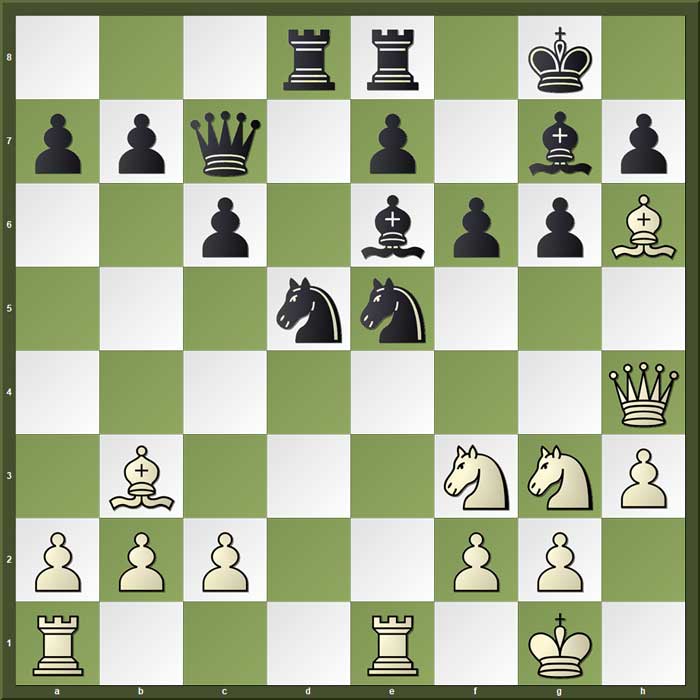
White to play
This game was played between Tal and Timman during the Chess Olympiad in Skopje 1972. The game continued 17. Bh6 Nxe5? (17. ... fxe5 18. Ng5! Nf8 19. Bxg7 Kxg7 20. Qxh7+! is also clearly winning. The best Black can do is probably 17. ... Nf8 immediately. The game might then continue 18. Bxg7 Kxg7 19. Rad1 when Black will have a difficult defence but still has hope.) 18. Rxe5! fxe5 19. Ng5 Bf6 20. Nxe6 1-0
(31)
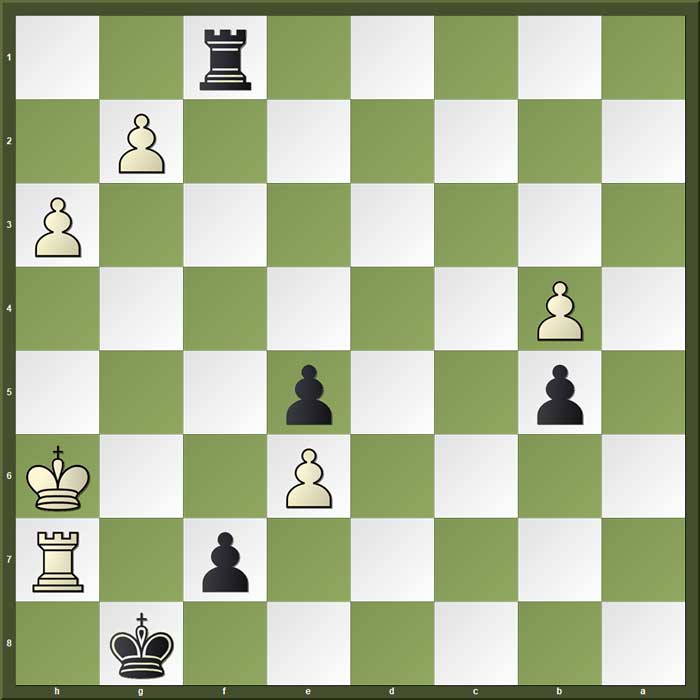
Black to play
In Tseshovsky - Tal (Sochi 1970), Tal showed good technique: 45. ... Rf6+ 46. Kg5 Rg6+ 47. Kf5 Kxh7 48. exf7 Kg7 0-1 (Black wins the pawn ending after 49. f8=Q+ Kxf8 50. Kxg6 e4)
(30)
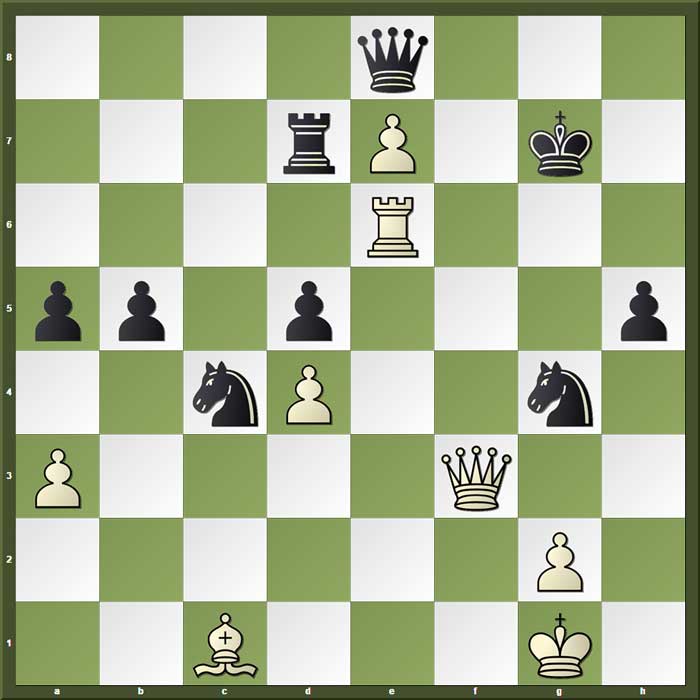
White to play
This is from a correspondence game played by Tal in 1961. He won the game with 1. Bh6+ (1. Bg5 only draws at best: Rd6 2. Bh6+ Nxh6 3. Qf6+ Kh7 4. Qxh6+ Kg8 5. Qg5+ Kh7 6. Qg6+ Qxg6 7. Rxg6 Kxg6 8. e8=Q+ Kf5 9. Qe2) 1... Nxh6 (1... Kh7 is no better 2. Qf5+ Kh8 3. Qf8+) 2. Qf6+ and Black resigned in light of 2. ... Kh7 3. Qxh6+ Kg8 4. Rg6+ Qxg6 5. Qxg6+ Kh8 6. e8=Q#
(29)
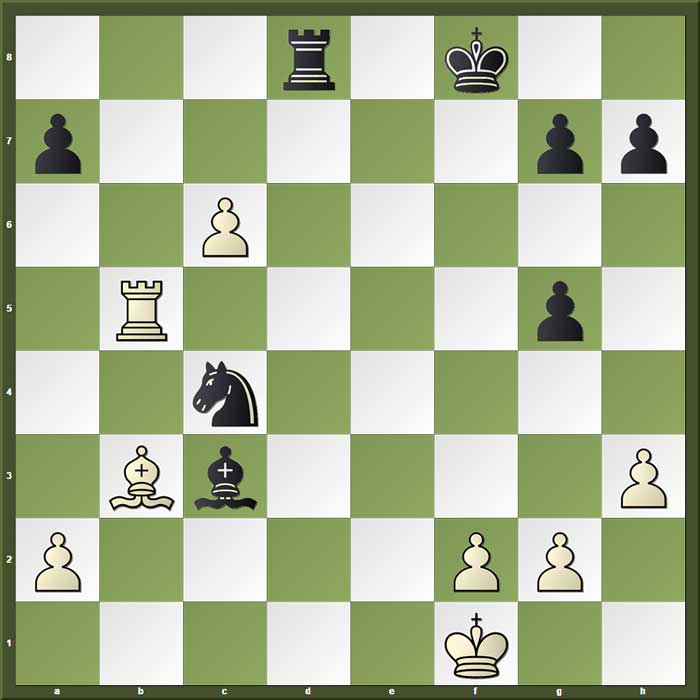
White to play
This is from Tal - Vasiukov (USSR Championship Kharkov 1967). Tal played 34. c7! (but not 34. Bxc4? because after 34. ... Rc8 35. Bd7 Rc7 there is a blockade on the dark squares) 34. ... Re8 (if 34. Rc8, then 35. Rb8 Nb6 36. Be6+) 35. Rb8 (35. Bxc4?? Re1#) 35. ... Nb6 36. Ba4 Rc8 37. Bd7 Be5 38. Bxc8 Bxc7 39. Rb7 Be5 40. Rxa7 and Black Resigned
(28)
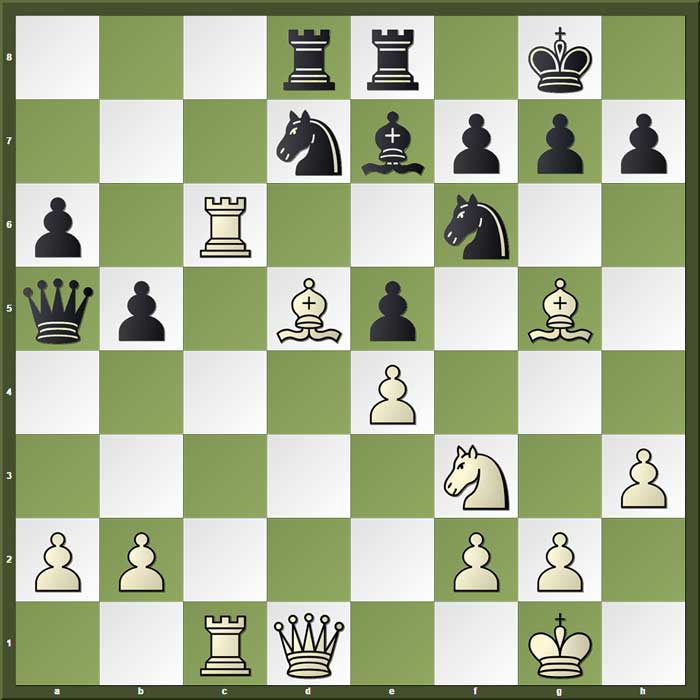
White to play
23. Bd2 b4 24. Bxf7+ Kxf7 25. Qb3+ 1-0 (Tal - Unzicker Stockholm 1960/61)
(27)
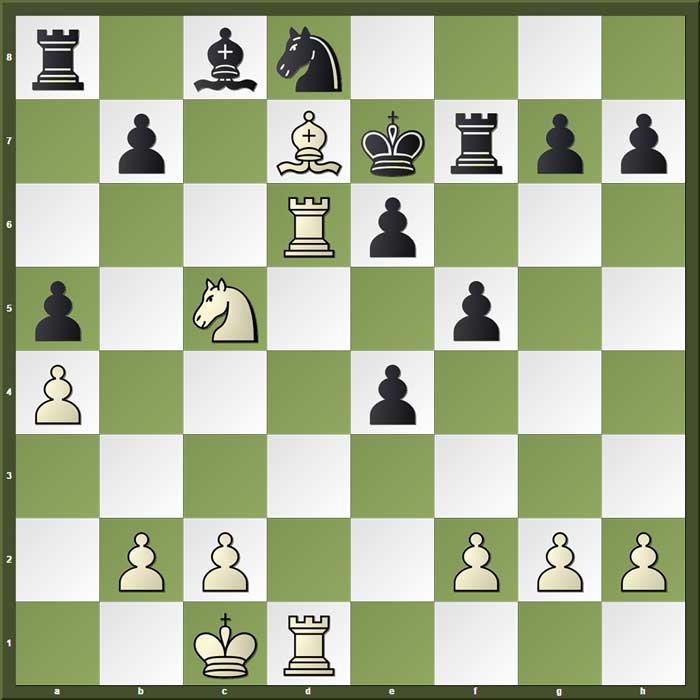
White to play
Tal - Sisniega (Interzonal Mexico 1985), saw Tal play 19. Nxe6 (19. Be8 Rf8; or 19. Bxc8 Rxc8 20. Rd7+ Ke8 21. Rxf7 Kxf7 22. Nxb7 Nxb7 23. Rd7+ Kf6 24. Rxb7 Rd8 are not good) 19... Bxd7 (19... Rf6 20. Bxc8 Nxe6 21. Bxb7 Ra7 22. Bc8; or 19... Nxe6 20. Rxe6+ Kd8 21. Be8+ Kc7 22. Bxf7 also don't help) 20. Nc7 Bxa4 21. Nxa8 Ne6 22. Nb6 Be8 23. R6d5 Bc6 24. Rxa5 Kf6 25. Nd5+ Kg6 26. Ne3 1-0
(26)
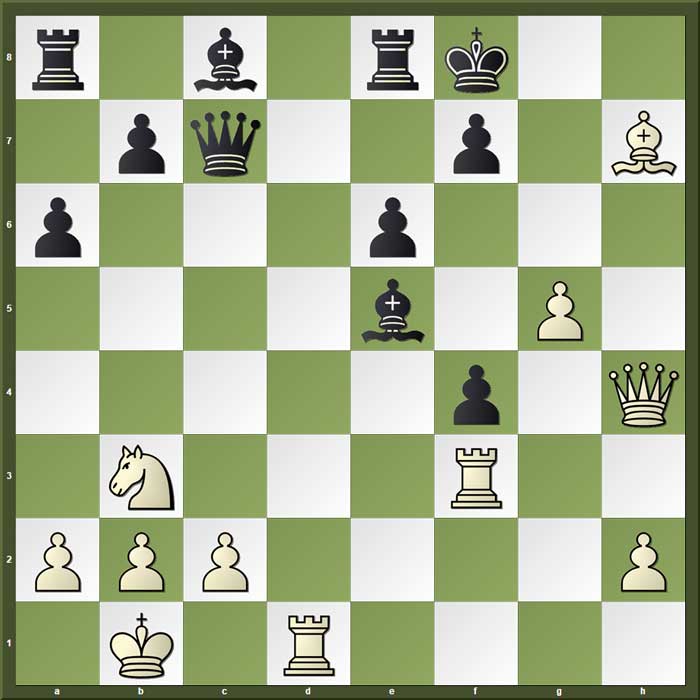
White to play
From Tal - Shamkovich (USSR Championship 1972). Here Tal played 25. Rxf4! which quickly won after Bxf4 26. Qh6+ Ke7 27. Qf6+ Kf8 28. g6 Bh6 29. Rf1 1-0 (in light of 29. ... Bg7 30. Qxf7+ Qxf7 31. Rxf7#)
(25)
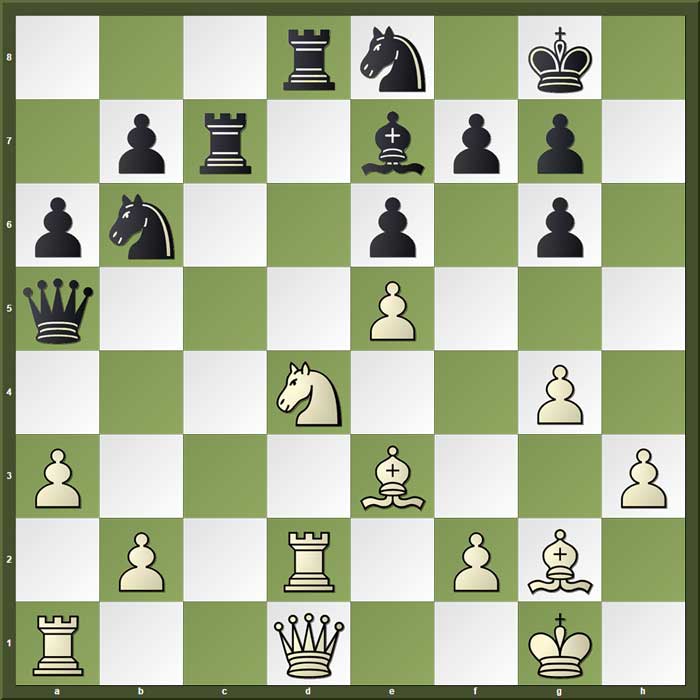
White to play
26. Nxe6! was played in Tal - Shabalov (Jurmala, 1985). The game continued 26. ... fxe6 (The point is that if Black had played 26. ... Rxd2 then after 27. Bxd2 Rd7 28. Bxa5 Rxd1+ 29. Rxd1 Nc4 30. Bc3 fxe6 White remains up on material) 27. Rxd8 Bxd8 28. Qxd8 Kf8 29. Rd1 Nc4 30. b4 Qa4 31. Bc5+ Kg8 32. f4 b6 33. Bf2 Rf7 34. Rd4 Nxa3 35. Rd6 Rxf4 36. Rxe6 Rf8 37. Bxb6 Nc4 38. Rxe8 Rxe8 39. Bd5+ 1-0
(24)
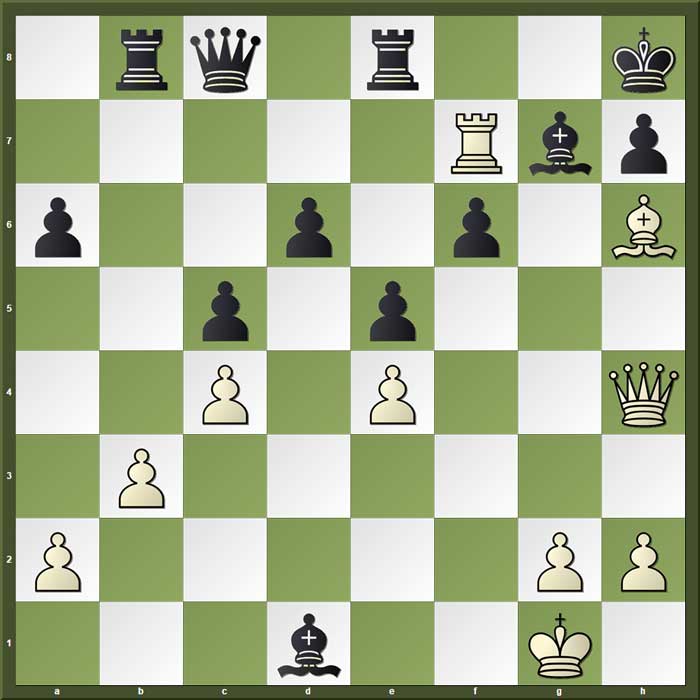
White to play
This is from Tal - Rantanen (2nd Keres Memorial Tallinn 1979. The first move 27. Bxg7+ is not hard to see (27. Rxg7 gives nothing after Qe6 28. Rxh7+ Kxh7 29. Bg5+ Kg8 30. Bxf6 Rf8 31. Qh8+ Kf7 32. Qg7+ Ke8 and the king escapes) but did you see that after 27... Kg8 White has 28. Bh8! (28. Qxf6 loses to Rb7 29. Rxb7 Qxb7 30. Bh6 Qf7) and White won: 28... Kxf7 29. Qxf6+ Kg8 30. Qg7#
(23)
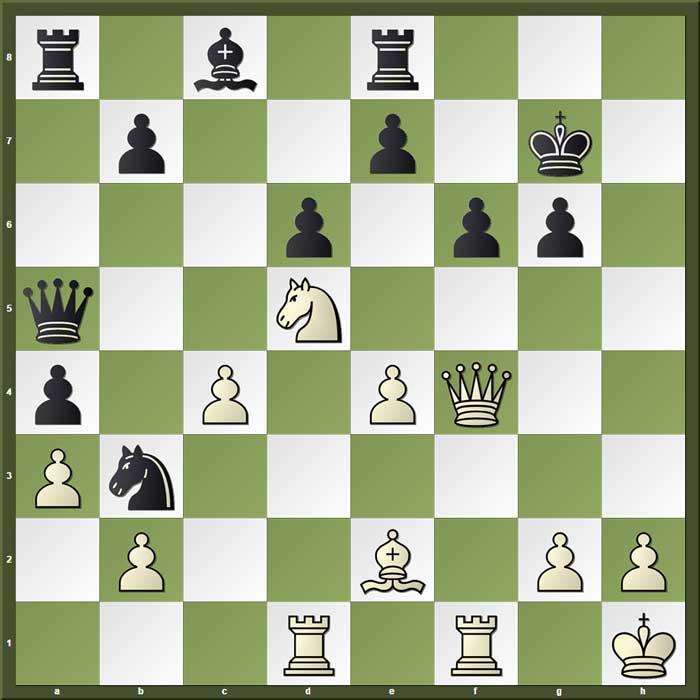
White to play
This position is from Tal - Menvielle Lacourelle Chess Olympiad 1966. Tal played 24. Nxf6! exf6 25. Qxf6+ Kh6 (25. ... Kh7 leads to mate after 26. Rf4 and 25. ... Kg8 also results in a quick mate after 26. Qxg6+ Kh8 27. Rf7) 26. Rd5 and the threat of Rh5 mate was too much for his opponent who resigned.
(22)
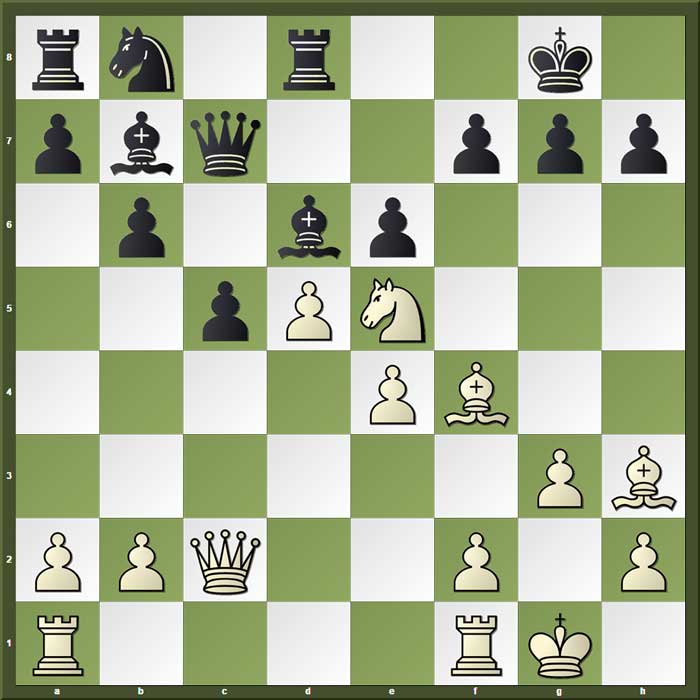
White to play
This position is from Tal - Lotzov (Semi-Final of the Championship of Riga, 1952). Tal used his initiative with a decisive knight sacrifice ... 16. Nxf7 Kxf7 17. Bxe6+ Ke8 18. e5 Bf8 19. Qxh7 Rxd5 (19... Nd7 allows a quick mate with 20. Qg6+ Ke7 21. Qf7#) (and 19... Rd7 also loses 20. Qh5+ Kd8 21. Bg5+ Re7 (21... Kc8 22. Qe8+ Qd8 23. Qxd8#) 22. d6 Qc6 23. dxe7+ Bxe7 24. Bxe7+ Kxe7 25. Qf7+ Kd8 26. Rad1+) 20. Qg6+ Kd8 21. Bg5+ Be7 22. Qf7 Nd7 23. Qg8+ 1-0
(21)
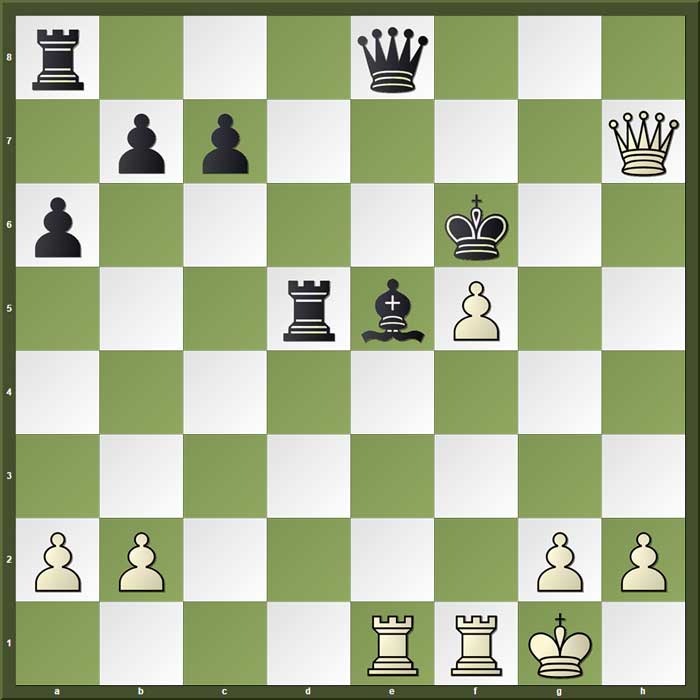
White to play
27. Re4! was played by Tal in Tal - Letelier Martner (Capablanca Memorial, Havana 1963). Although other moves (e.g. Qh6+) are also evaluated by the computer as equally good, they ultimately all rely on this rook manoeuvre which carries the enormous threat of Rg4 and Rg6#. The game ended following 27. ... Bd4+ 28. Kh1. White would be winning after 28. ... Qxe4 29. Qg6+ Ke7 30. f6
(20)
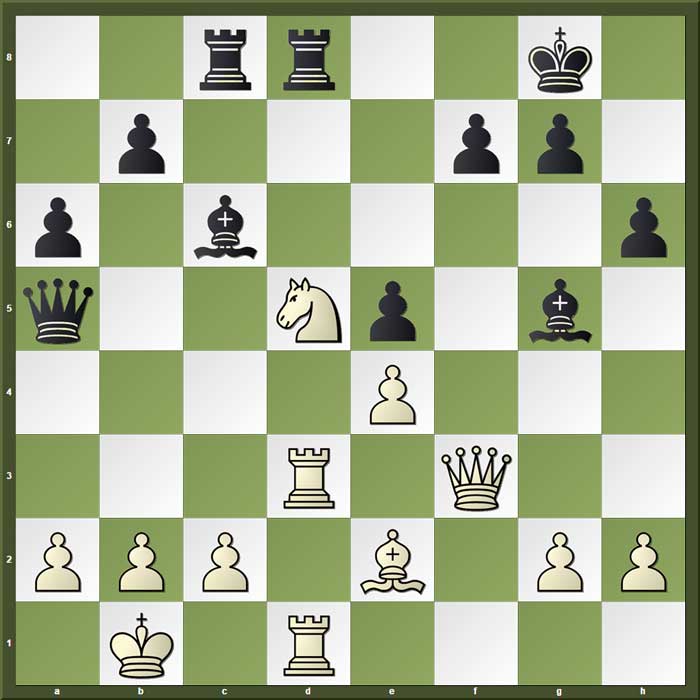
White to play
This position is from Tal - Larsen (World Students Team Championship Reykjavik,1957). It was the first meeting between these two great players who were to both go on to wonderful chess careers. Larsen had just played 20. ... Rac8? following which Tal was able to show the Achilles Heal in Larsen's position with the response 21. b4! after which Larsen's queen is embarrased by a lack of retreat squares. The game continued Qa4 (21... Qb5 22. Nf6+ Bxf6 23. Rxd8+ Rxd8 24. Rxd8+ Bxd8 25. Bxb5) 22. Ra3 Rxd5 23. exd5 e4 (23... Qxb4+ 24. Rb3 Qc5 25. dxc6 Rxc6 26. c4 saves the queen but at great cost) 24. Qc3 Bf6 25. Rxa4 1-0
(19)
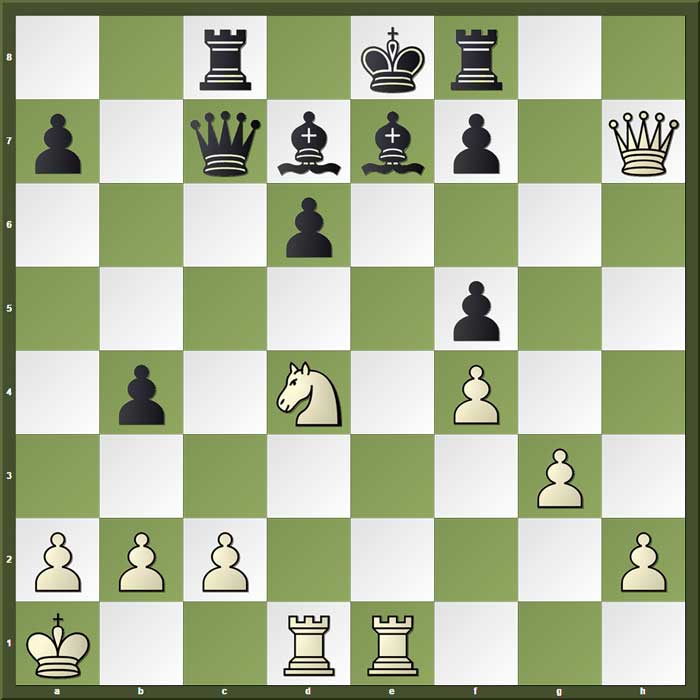
White to play
In Tal - Klaman (USSR Championship, Moscow 1957), Tal won following 24. Rxe7+! Kxe7 25. Re1+ Kd8 26. Qh4+ f6 27. Qh6 Qa5 28. Nb3! (28. Qxf8+?? Kc7 29. Qxf6 b3 and it is Black who is winning) 28... Qd5 29. Qxf8+ Kc7 30. Qxf6 Re8 31. Rc1! Ba4 32. Qd4 Qb7 33. Rd1 Re6 34. Qc4+ and Black resigned.
(18)
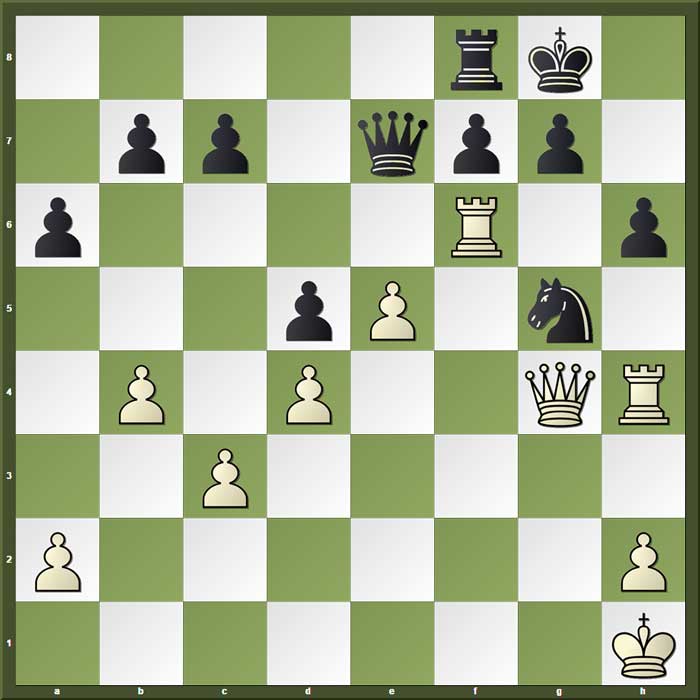
White to play
43. Rhxh6
(43. Qh5? would only lead to perpetual check after 43. ... Ne4 44. Rxh6 gxh6 45. Qxh6 f5 46. Qh8+ Kf7 47. Qh5+ (47. Rh7+ loses: 47. ... Kg6 48. Rh6+ Kg5 49. Rh5+ Kg4) 47... Kg8 48. Qh8+)
(and 43. Rfxh6? is not as good because although White would be better after 43. ... gxf6 44. Rxh6 f6 45. h4 Qe6 46. Qxg5+ fxg5 47. Rxe6, Black could still put up a good fight.)
43... Ne4 (or 43... gxh6 44. h4 Kg7 45. hxg5 h5 46. Qf5 Qe8 47. Rh6 Rg8 48. e6 Kf8 49. g6 Qxe6 50. g7+ Kxg7 51. Rxe6 fxe6 52. Qxe6) 44. Qh5 gxh6 45.Rxh6 and Black Resigned
The position is from Tal - Keres (Tallinn, 1973). Paul Keres was known as "the Eternal Second" because of him finishing in second place in four successive Candidates tournaments between 1953 and 1962 and therefore never getting the chance to play for the world title. Less well known is that he also once placed second in the Estonian Tennis Championships. This was in 1942 when, together with Valter Lamp, he finished runner-up in the men's doubles.
(17)
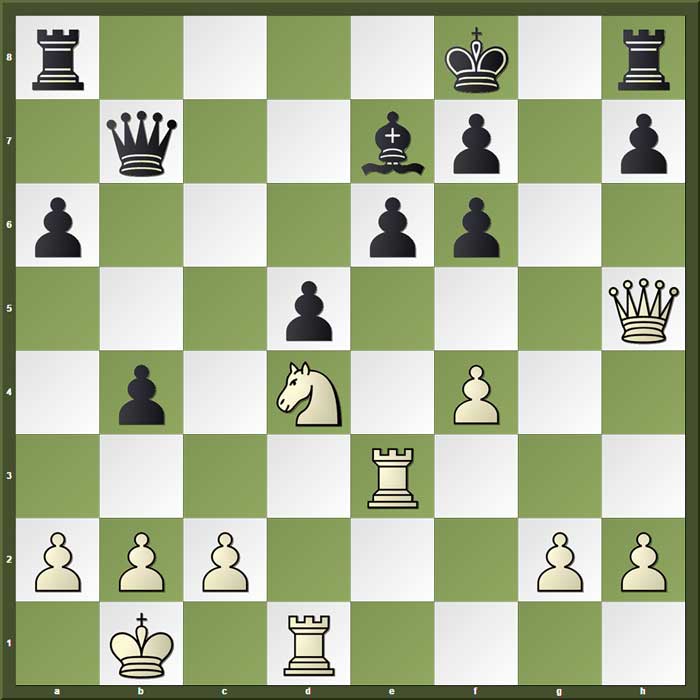
White to play
Tal chose 21. Rxe6! (There are also lots of other ways to win: one example is 21. Qh6+ Ke8 22. Rde1 Rf8 23. Nxe6 fxe6 24. Rxe6 Rf7 25. Rxf6 Rxf6 26. Qxf6 Rb8 27. f5 Kd8 28. Qh8+ Kd7 29. Qxh7 Re8 30. f6) 21... fxe6 22. Nxe6+ Kg8 23. Rd3 1-0
The game was played in the Stockholm tournament of 1960/61 between Tal and the Swedish player Johansson
(16)
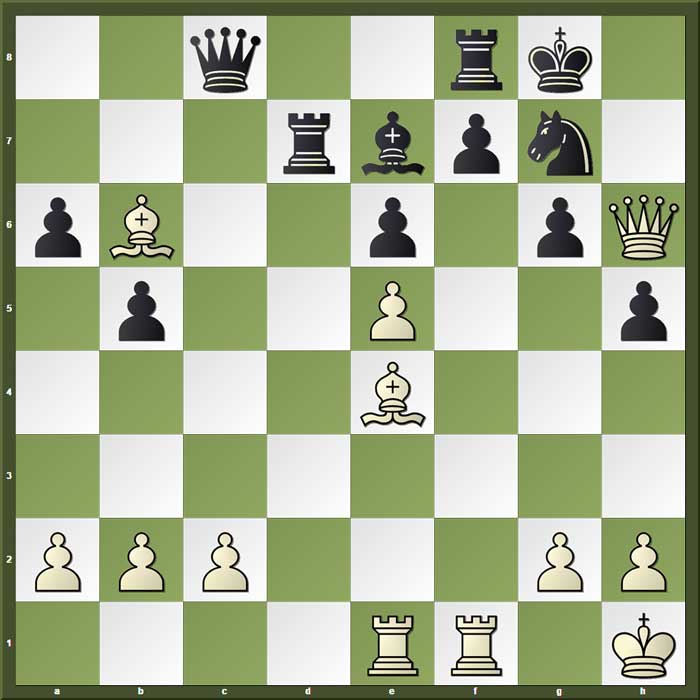
White to play
24. Rxf7! was played by Tal in Tal - Hartston on his way to winning the Hastings Congress 1973/74. The game continued Rxf7 25. Bxg6 Nf5 26. Bxf7+ Kxf7 27. Qh7+ and Black resigned
(15)
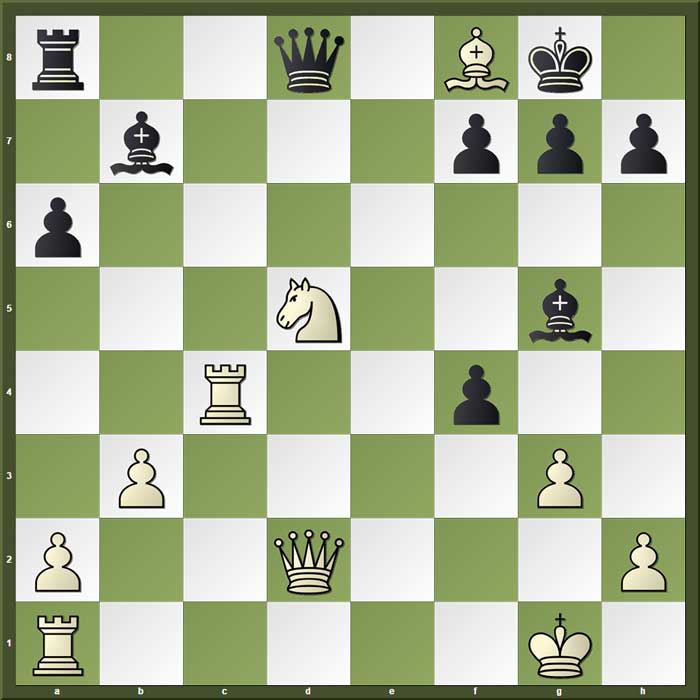
White to play
In the mid-1980s wild and unusual games from Tal were very much the exception. In the Tiflis tournament of 1986, from which this position is taken (Tal - Foisor), Tal drew 8 out of 9 with no more than 18 moves. Nevertheless Tal was still capable of magic as in this game, where he stopped Black's initiative in its tracks. Tal played 23. Be7 Bxe7 (23... fxg3 24. Qxg5 gxh2+ 25. Kxh2 Qxd5 26. Qxd5 Bxd5 27. Rd4) 24. Nxe7+ Qxe7 25. Re1 Qf6 26. Qxf4 Qb6+ 27. Qe3 and Black resigned
(14)
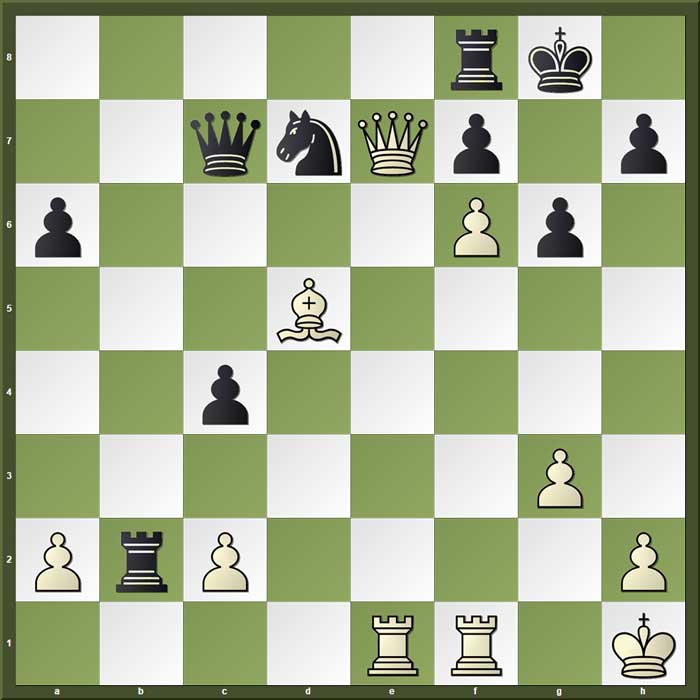
White to play
The position is from Tal - Darga (1960). Tal played 25. Re6 (25. Rd1 Qc8 26. Bg2 Nc5 27. Rd6 Nb7 28. Rd7 Nd8 29. Rfd1 Ne6 30. Bd5 Rb6 31. Re1 Ng5 32. Re5 also wins, but not so effectively but 25. Bxf7+ would be a mistake because of Rxf7 26. Qe8+ Rf8 27. Qe6+ Kh8 28. Qe7 Qc6+ 29. Re4 Rg8 30. Kg1 Qc5+ 31. Qxc5 Nxc5 32. Rxc4 Nd7 33. Rc6 Rf8 34. Rxa6 Rxc2 and Black is somewhat better due to his material advantage and the White pawn on f6 will eventually drop.) 25... Rbb8 26. Rd6 Rbd8 27. Rd1 and Black resigned
(13)
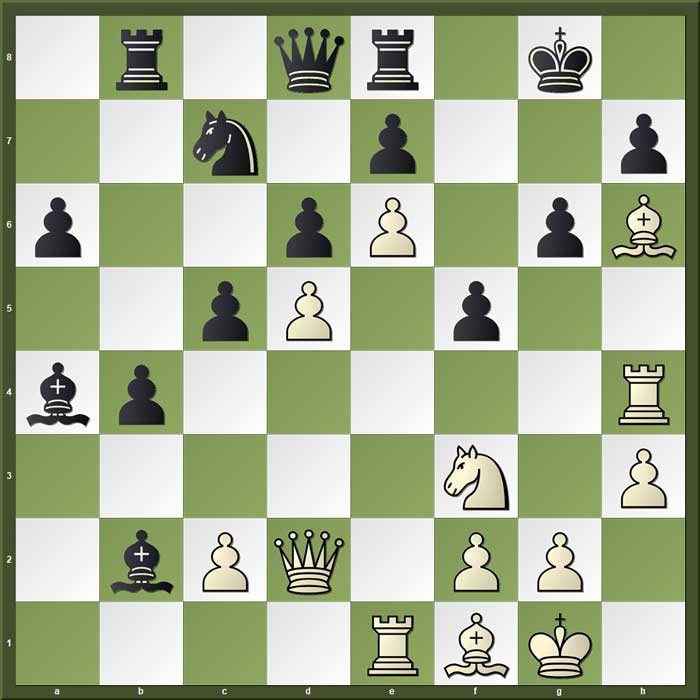
White to play
The position is from Tal - Benko (Candidates Tournament 1959). Tal played 23. Bf8! and there followed Rxf8 24. Qh6 Rf7 25. exf7+ Kxf7 26. Qxh7+ Bg7 27. Rh6 Qg8 28. Qxg6+ Kf8 29. Ng5 Qxd5 30. Rh8+ and Black resigned.
Although Pal Benko spent his first 29 years in Hungary, he was actually born in Amiens, France. From Hungary he moved to the United States and won 8 US Championships. In the 1990s he also played in the German Chess League for SK 1908 Gögingen. Tal had a very good record against him - he won 8, drew three times and had only one loss (the latter was at the 1962 Candidates Tournament at a time when Tal's health was bad, causing him to withdraw from the tournament after the third round).
(12)
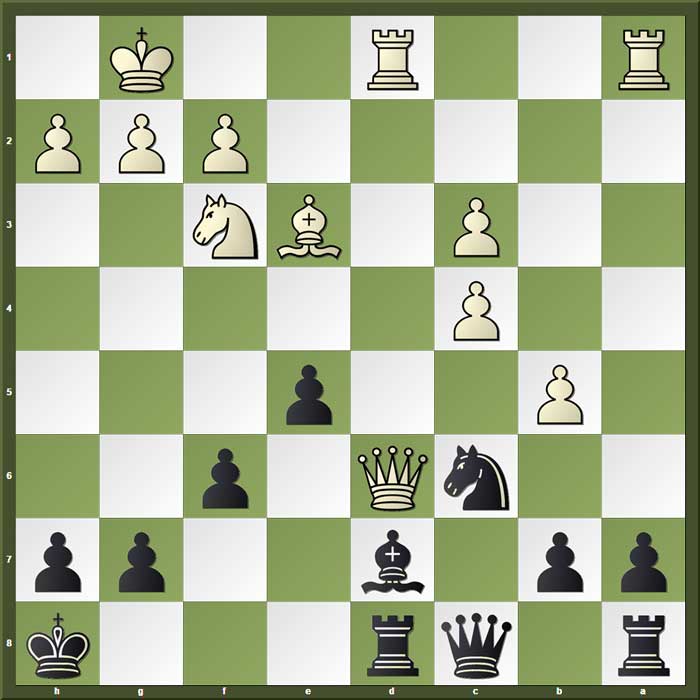
Black to play
In Taimanov - Tal (Championship of the USSR, Moscow 1957), Tal played 19. ... Bh3! then followed 20. Qa3? (White would have done better by giving up his Queen with 20. bxc6 Rxd6 21. Rxd6 Bf5 22. cxb7 Qxb7 23. Nd2) 20. ... Rxd1+ (Black has to be careful ... it would be a big mistake to play 20. Qg4 immediately because this would have allowed 21. Rxd8+ Rxd8 22. Ne1) 21. Rxd1 Qg4 22. Ne1 Qxd1 23. gxh3 Qxe1+ 24. Kg2 Nd4 25. cxd4 exd4 26. Bf4 Qe4+ 27. Kg3 h5 28. Qd6 Kh7 29. Qd7 Re8 30. h4 Qg6+ 31. Kf3 Re1 and White resigned
Mark Taimanov had won the USSR Championship the previous year when Tal, making his debut finished 7th. This time, however, Tal became Champion. Taimanov considered that he had been unlucky in this game to lose to Tal and immediately afterwards said, "If Tal wins the Championship again, I'll eat my hat!" Next year the Championship was held in Tal's hometown of Riga and Tal won again. I don't know what happended to Taimanov's hat!!
(11)
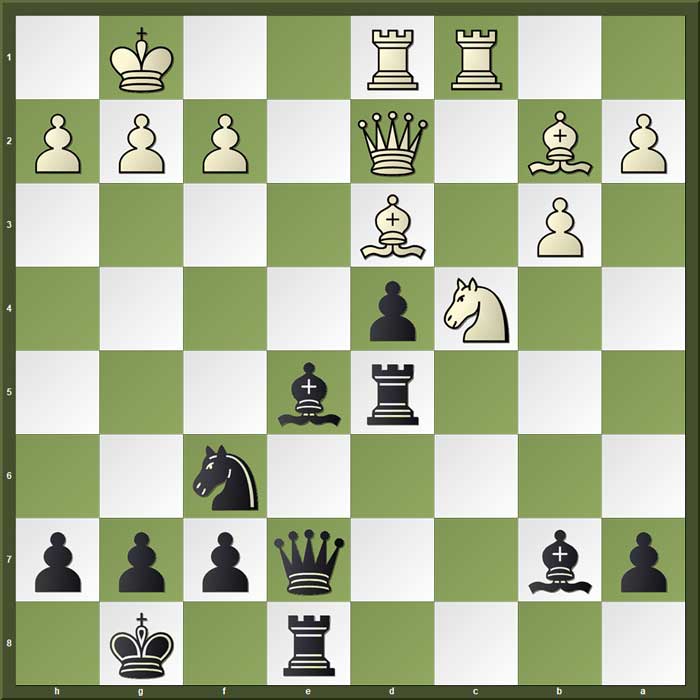
Black to play
20. ... Bxh2+!was played by Tal in his game against Spassky in Montreal, 1979. This was the strongest tournament ever held since the introduction of FIDE ratings. Of the top ten players in the world, only Bobby Fischer was not present. Tal finished second although he actually scored the same points as the winner, Karpov. The latter had just successfully defended his world championship against Korchnoi in Baguio and Tal had been one of the seconds on his team. Perhaps this explains why they both had such a great tournament.
The move played is a type of the well-known "Greek Gift". After 21. Kxh2, Tal followed up with 21. ... Rh5+ (also good is 21. ... Ng4+ 22. Kg3 Rg5 23. f4 Ne3+ 24. fxg5 Qc7+) 22. Kg1 (22. Kg3 Ne4+ 23. Bxe4 Qh4+ 24. Kf3 Qxe4+ 25. Kg3 Qh4#) 22. ... Ng4 and White resigned as mate is unavoidable - 23. Re1 Rh1+ 24. Kxh1 Qh4+ 25. Kg1 Qh2+ 26. Kf1 Bxg2/Qxg2 and Qh1#
(10)
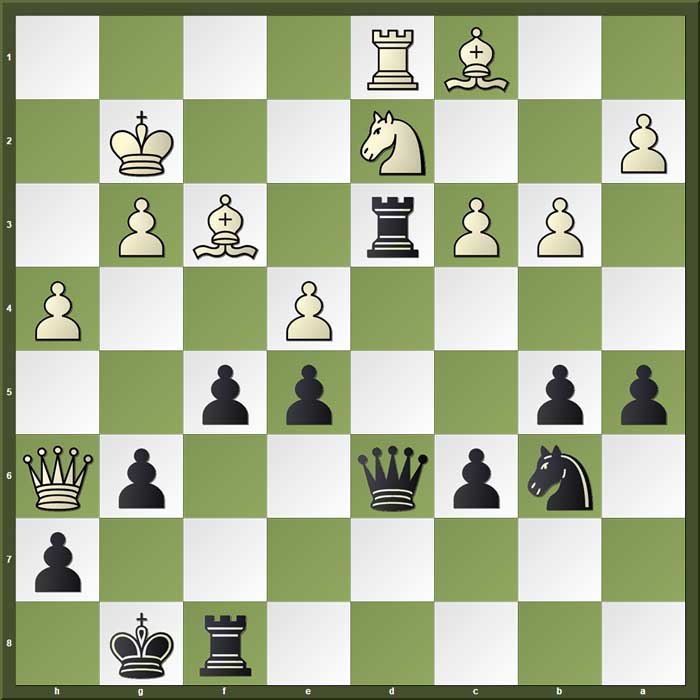
Black to play
Here we have Ribli - Tal from the Candidates Tournament 1985 held in Montpelier. Tal won with 26. ... Rxf3 27. Nxf3 (27.Kxf3 Qd3+ 28. Kf2 [28. Qe3 fxe4+ 29. Kg2 Qxe3] 28... fxe4+ 29. Kg2 Qe2+ 30. Kh3 Qxd1) 27... Qxd1 28. Ng5 and White resigned without waiting Black's reply (28. ... Qh5 or Qd7 would both be clearly winning)
(9)
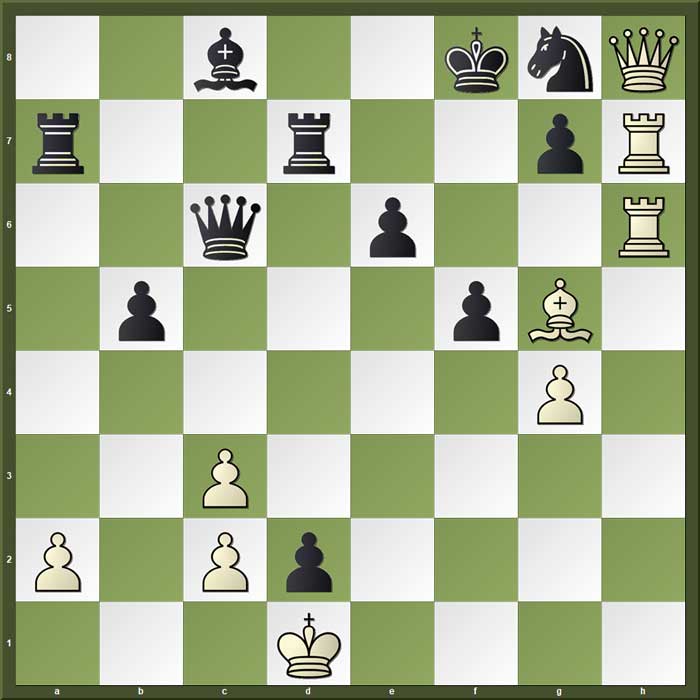
White to play
This is from Tal - Koblenz (Riga, 1957). Tal won with 36. Rf6+ Rf7 (36... gxf6 37. Bh6+ Rg7 38. Bxg7+ Ke7 39. Bxf6+ Kd6 40. Be5+ Kd5 41. Bb8 Qxc3 [41. ... Rxh7 allows a mate in one - 42. Qd4#] 42. Qxc3 also gives a winning advantage) 37. Qxg7+ and Black resigned as White's attack leads to mate.
(8)
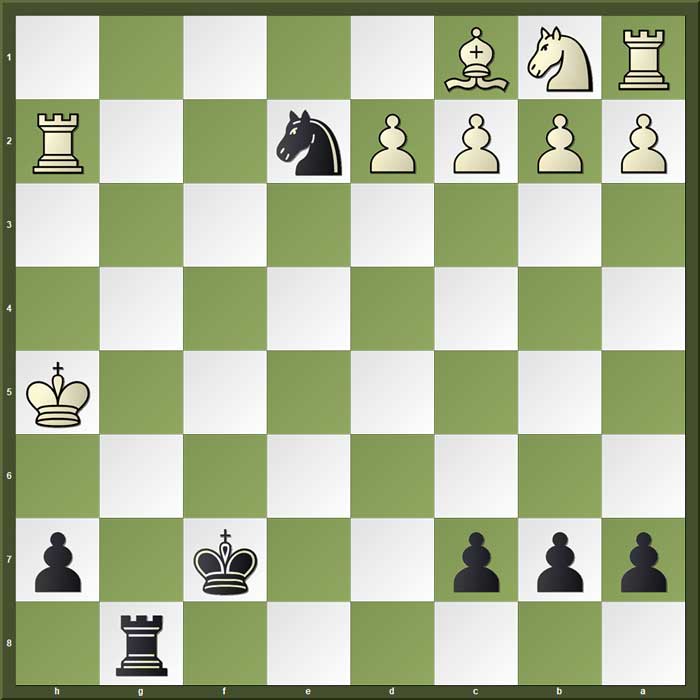
Black to play
This is from a game that Tal played by telephone in 1969 between himself as Black and the readers of "Pionerskaya Pravda" (the official, heavily circulated, national newspaper for children and teenagers in the Soviet Union) as White. If you played 26. ... Nf4+ then you did better than Tal on this occasion as he played too nonchalantly here and chose 26. ... Ng3+ which should only have resuted in a draw after 27. Kh4 Nf5, but the readers instead chose 27. Kh6 which allows mate (27. ... Rg6+ 28.Kxh7 Ne4 29. Rf2 Nxf2 30. d4 Ng4 31. Kh8 Nf6 32. Nc3 Rg8#) but Tal once more went wrong with 28. ... NF5+ allowing Rg7 with perpetual check. After the correct 26. ... Nf4+ Black would be winning: 27. Kh6 (27. Kh4 h5! and Black will mate with Rg4) 27. ... Rg6+ 28. Kxh7 Rg7+ 29. Kh6 (29. Kh8 Ng6#) Kg8 and White cannot prevent mate by Rg6 (30. Rg2 only delays the inevitable by one move after Black takes the White rook).
P.S. The manoeuvre that Tal overlooked had been seen in the Carlsbad tournament of 1911 in the game between Rotlewi and Fahrni which the White player won in 81 moves: perhaps showing that studying the classics can be useful!
(7)
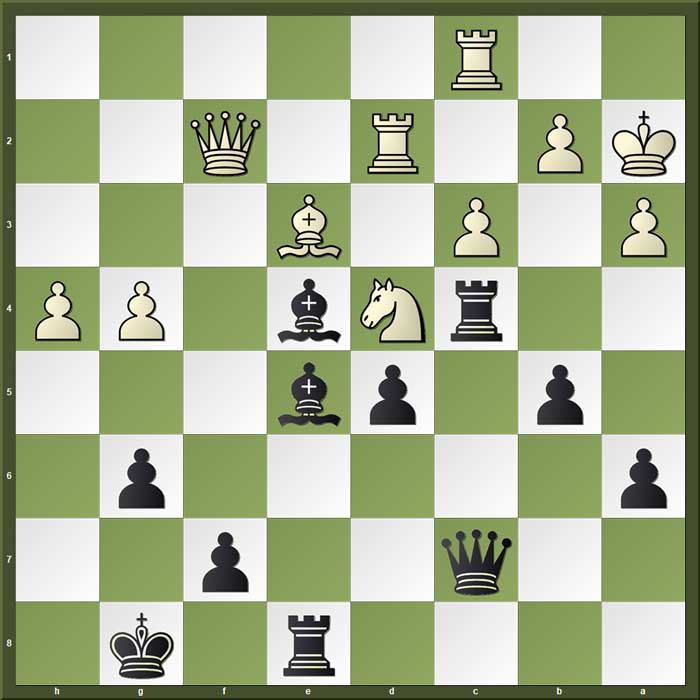
Black to play
29. ... b4!!. This move opens the door of the White King's fortifications. There followed 30. axb4 a5 31. Nb5 Qb7 32. b3 (there is no rescue in 32. Na3 axb4 33. Nxc4 dxc4) 32. ... Qxb5 and White resigned in view of the continuation 33. bxc4 Qa4+ 34. Kb2 Qxb4+ 35. Ka2 Qa4+ 36. Kb2 Rb8+ 37. Bb6 d4 and Black is mating. The game is Mestrovic - Tal (Sarajevo 1966).
(6)
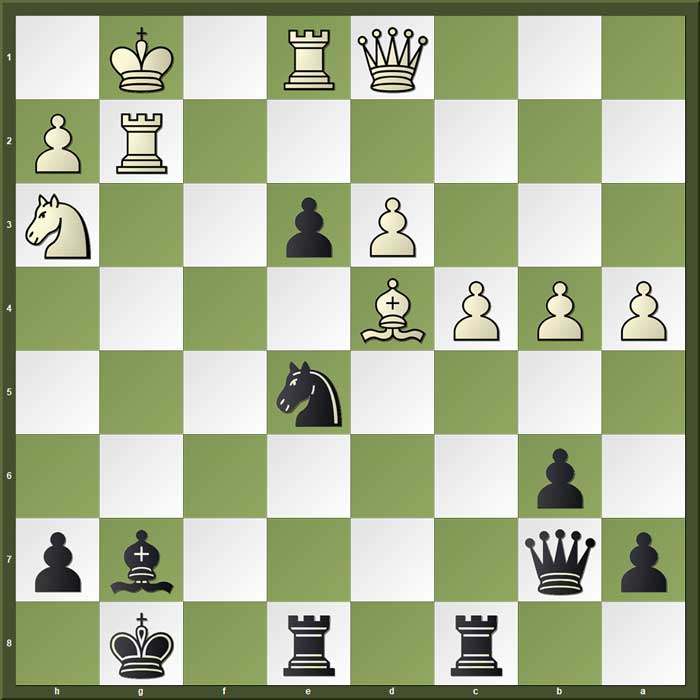
Black to play
Tal was Black in this game played against Larsen in Bugojno in 1984. Here he shocked his opponent with 28. ... e2!!, so much so in fact that Larsen resigned immediately. 29. Qxe2 naturally loses to 29. ... Nf3+ 30. Qxf3 Rxe1+ 31. Kf2 Rf1+ and Black also loses a piece after 29. Rexe2 Nf3+ 30. Kf1 Nxd4
(5)
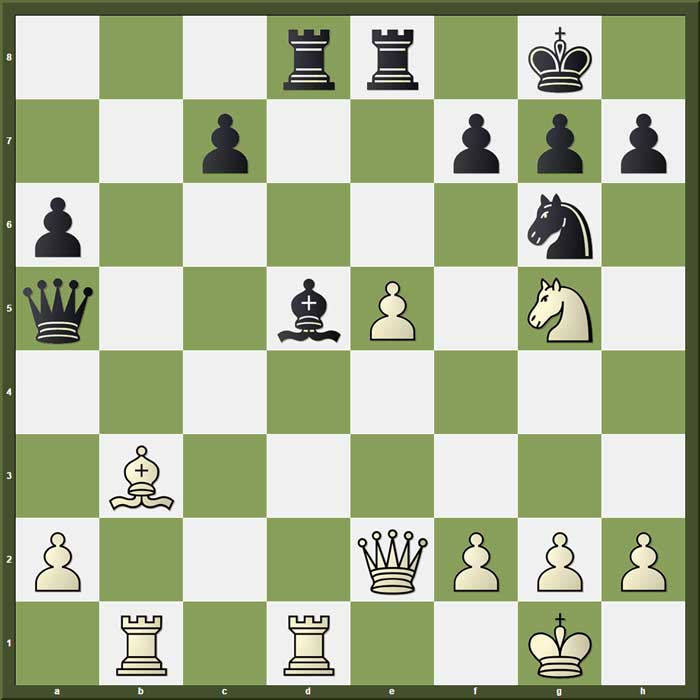
White to play
Another Tal - Geller game. This time it's from a match between the USSR and Yugoslavia played at Budva in 1967. Tal played 23. Rxd5! Rxd5 24. Qf3 and Geller resigned. It was perhaps a little premature - although he is clearly worse, one example continuation would be 24. ... Rexe5 25. Qxf7+ Kh8 26. h3 Qb4 27. Kh2 Rxg5 28. Bxd5 Qf8 29. Qxc7 when White would have the advantage due to his extra pawn and the weakness of Black's back rank, but nevertheless there would still be some way to go before victory could be claimed.
P.S. Tal didn't always have his own way against Geller. Overall they had 22 draws and 6 wins each.
(4)
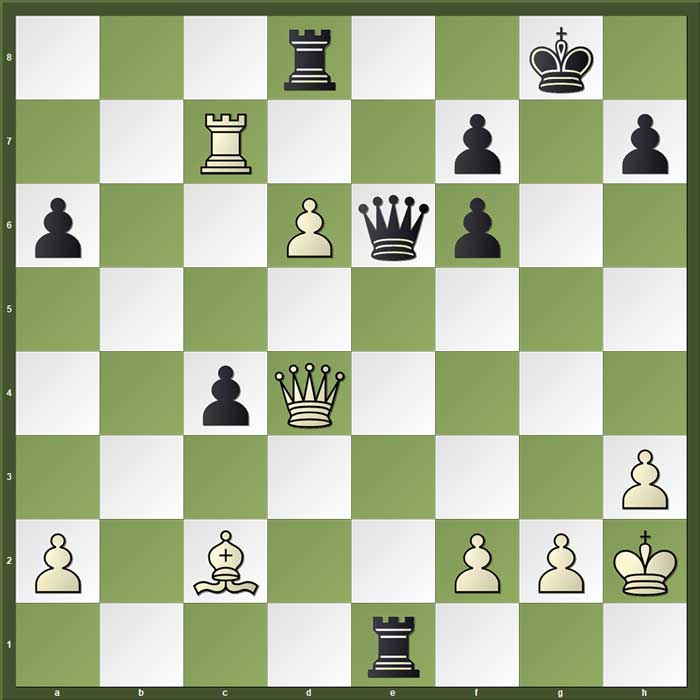
White to play
The game is Tal - Geller (USSR Championship, Riga 1958). The tournament was particularly important for Tal because it was held in the town of his birth, but even more than that, it was also a zonal tournament towards a match for the World Championship. To qualify he had to finish in the top four. Unfortunately, he didn't get off to a good start, only scoring 50% in the first half of the tournament but he finally managed to find his form (as Geller found out in this game!) and went on to finish in first place ahead of Petrosian, Bronstein and Averbakh.
In the position in the diagram, Geller had just played 25. ... gxf6, overlooking Tal's deadly response: 26. Re7! (26. Bxh7+ Kxh7 27. Qh4+ Kg7 28. Qg3+ is only a draw and 26. d7 Re2 27. Ba4 Kf8 is even advantageous for Black) 26. ... Qxd6+ (if 26... Qxe7 27. Qg4+ Kf8 28. dxe7+ Rxe7 29. Qxc4 with a winning advantage for White; and if 26. ... Rxd6, Black loses because of 27. Qh4) 27. Qxd6 Rxd6 28. Rxe1 Rd2 29. Rc1 Rxf2 30. Be4 Rxa2 31. Rxc4 a5 32. Rc8+ Kg7 33. Rc7 and Black resigned.
(3)
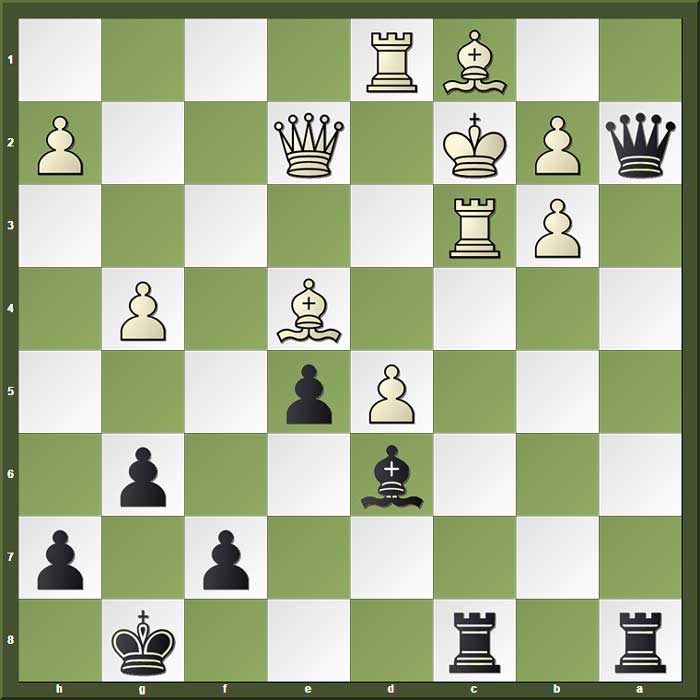
Black to play
This is Honfi - Tal (Suchumi, 1972). Tal forced his opponent's King into the open with 30. ... Rxc3+ 31. Kxc3 Bb4+!! 32. Kxb4 after which there followed 32. ... Qa5+ 33. Kc4 Qa6+ resulting in the loss of White's queen on e2 and therefore White resigned. Note that 31. ... Rc8+? would have been a mistake as this would simply have driven the White King into safety after 32. Kd2 Qxb3 33. Ke1
(2)
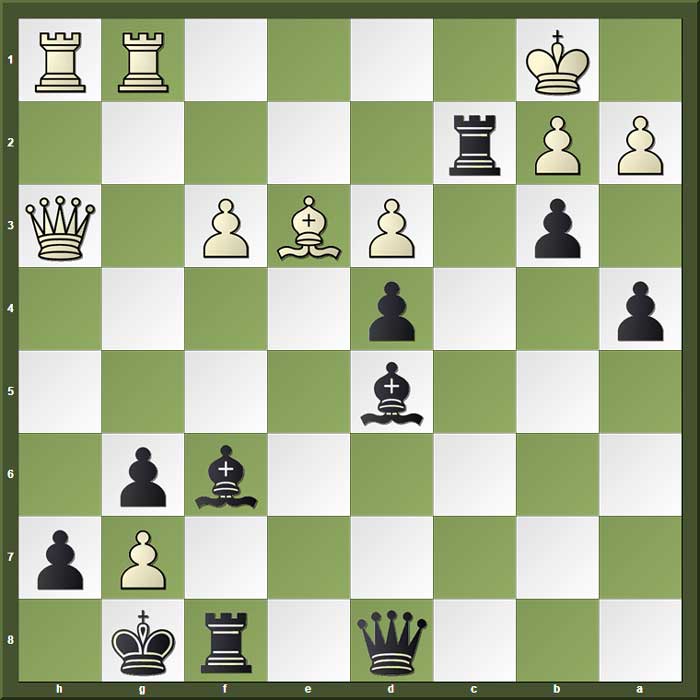
Black to play
This is from the game Bönsch - Tal (Halle/Saale, 1974). The first move is not hard to see given that White is threatening checkmate, but did you visualise all the variations?: Tal played 29. ... Rxb2+! 30. Ka1 (30. Kxb2? dxe3+ 31. Kc1 Qc7+ 32. Kd1 Qc2+ 33. Ke1 Bc3+ 34. Kf1 Qf2#) 30. ... Rb1+ 31. Kxb1 (31. Rxb1 dxe3+ 32. Rb2 Bxb2+ 33. Kxb2 Qf6+ 34. Ka3 Qe7+ 35. Kb2 a3+ 36. Kb1 bxa2+ 37. Kc2 Qc7+ with a clear advantage for Black) 31. ... bxa2+ 32. Kc2 Qc7+ 33. Kd2 Qc3+ 34. Ke2 Qc2+ 35. Bd2 Re8+ 36. Kf2 Qxd2+ 37. Kg3 Be5+ and White resigned.
P.S. The very fact that a grandmaster tournament organised by the DDR Schachverband could be held in Haale/Saale in 1974 was remarkable because two years earlier the East German Government had listed chess as not worthy of support which resulted in East Germany not taking part in Chess Olympiads or the World Championship.
(1)
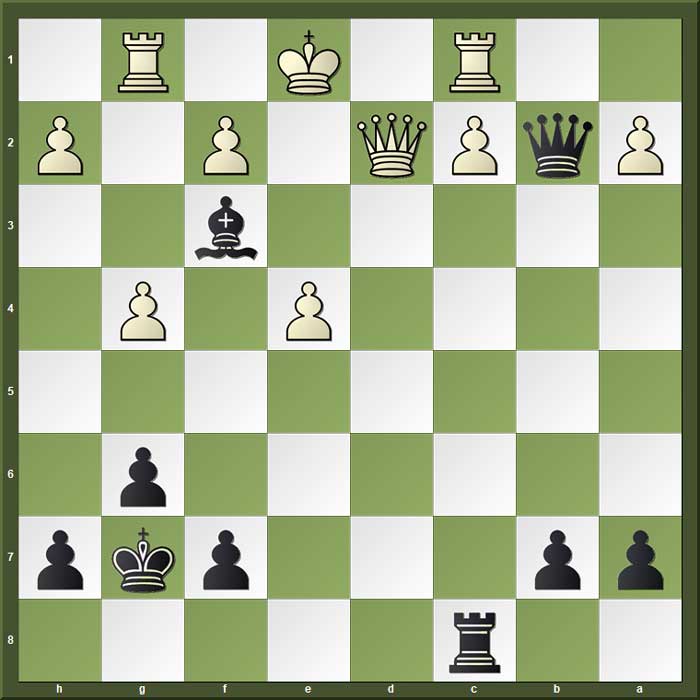
Black to play
In Barcza-Tal (Tallin, 1971) Mikhail Tal played 21. ... Rd8! deflecting White's most important defensive piece, after which, White's posiiton quickly collapses: 22. Qe3 (in case of 22. Qxd8, Black wins with 22. ... Qxc1+ 23. Qd1 Qxd1#) 22. ... Qxc2 23. Kf1 (23. Rxc2 Rd1#) 23. ... Rd1+ and Barcza resigned because he will be mated - 24. Rxd1 Qxd1+ 25. Qe1 Qd3+ 26. Qe2 Qxe2#